

Pamphlets
CPN-PREV collaborates with a diverse range of partners to contribute to research and publications on the prevention of violent extremism. This section features a curated collection of pamphlets supporting learning and awareness of current developments in the field.
Search for specific content or browse by category to discover resources relevant to your interests
Please note some resources are only available in french or english and that some of these resources were published by members, network partners, or other reliable sources, but have not all been evaluated by CPN-PREV.
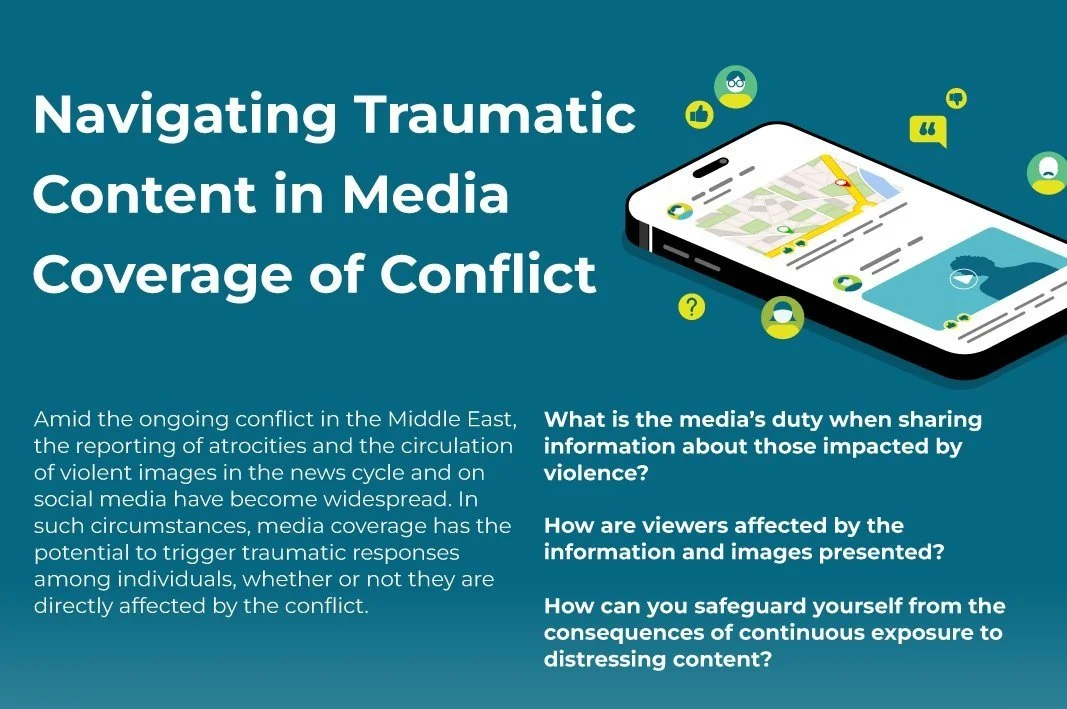
Navigating Traumatic Content in Media Coverage of Conflict
Media coverage of conflict and violence has a profound impact on audiences and communities. Our new infographic, “Navigating Traumatic Content in Media Coverage of Conflict,” highlights the ethical responsibilities of the media and the emotional effects of repeated exposure to distressing content, including desensitisation, trauma accumulation, and emotional exhaustion.
Conflit au Moyen-Orient: Mitiger les impacts dans les écoles du Québec
[French only]
The violence taking place during recent events in the Middle East arouses feelings of horror, fear, sadness and anger not only among families and young people in communities involved nationally or religiously, but more broadly among all Quebecers. This situation can cause or fuel interpersonal and intercommunity tensions in schools. This short document from RAPS offers ways of understanding and taking action to support young people affected by the situation and to preserve a cohesive school climate.
PROFILE – A Practical Toolkit to Understand Racial and Social Profiling and to Find Ways Forward
This practical toolkit was commissioned by the Canadian Commission for UNESCO and developed by Project Someone at Concordia University. Designed both for individuals and for groups, it gives a chance to understand issues related to social and racial profiling, unpack this problem in marginalized communities and consider some solutions and ways forward. It is organized around five central questions and teaches empathy and creative thinking.